This video is based on Bernardo Kastrup's book 'Decoding Jung's Metaphysics'. It goes on for 42 minutes so it's kinda epic. Highly recommended if you want to know 'what's really going on'. Check the Youtube channel for more DEEPsee video's.
6.7.22
A Philosophy of Astrology #8 ~ The Symbolism

In part 7 of this series we saw that in the Jungian synchronistic worldview, both the internal world (thoughts, dreams etc.) and the external world are amenable to symbolic interpretation. In this post we'll take a closer look at the nature of astrological symbolism.

3.7.22
A Philosophy of Astrology #7 ~ The Key
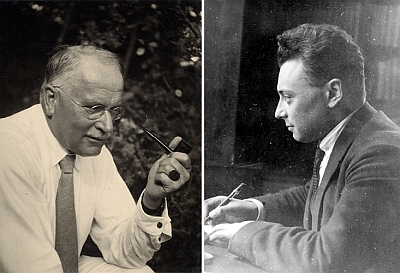
When Carl Jung and Wolfgang Pauli discussed synchronicity, they were not just looking for a way to explain extraordinairy meaningful coincidences. The real goal was to come up with a theory that allows for the integration of matter and meaning, or physis and psyche.
21.4.22
Oscar Wilde or the anatomy of the Big Slap
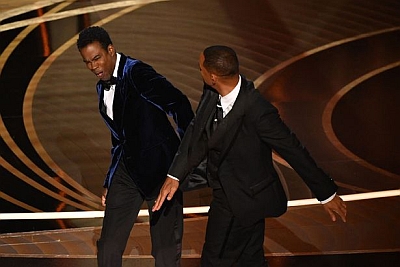
When something remarkable happens, the kind of thing everybody talks about, there's a 99% chance that the asteroids have something to say about it too. The big slap during this year's Oscars is a classic.
19.4.22
Asteroids and volcanoes

In this post we’ll look at ‘confirmed’ volcanic eruptions in Italy in the 16th and 17th century with a known start date. In the astrological chart for each eruption the positions of asteroids Vulcano, Etna, Vesuvius and Stromboli are of special interest.
A Philosophy of Astrology #6 ~ The Science
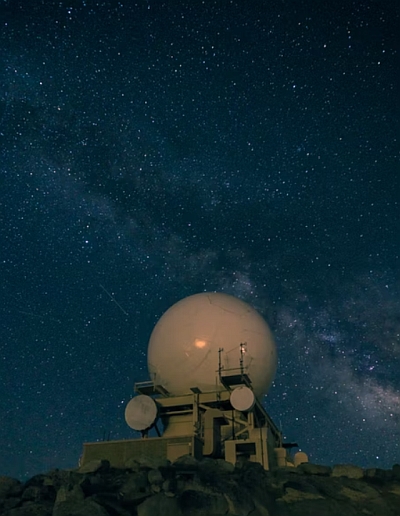
For most people with a scientific background it's simply common sense that all things astrological are nonsense, when in fact, there's solid quantitative research to back up various astrological claims. Very few professional scientists have reviewed it.
12.6.21
Cryptocurrency astrology #2 ~ Manipulation

Markets are subject to manipulation. Big institutions, big media, trolling billionaires, governments, central banks and regulators have the power to move markets. But what's moving those movers and shakers? Or to quote Robert Anton Wilson: what's really going on?
22.5.21
Cryptocurrency astrology #1 ~ Bitcoin basics

Cryptocurrencies will be an important part of future money. Some people think of Bitcoin as digital gold. But whatever your opinion might be, cryptocurrencies are also interesting from an astrological point of view: lots of timestamps and significator asteroids.
23.3.21
Jacob Collier's astrological muses
A week ago Jacob Collier won his fifth Granny. Not bad, considering that he was born on the 2nd of August 1994 (in London). Collier has Mozartian levels of musical skill, and he knows how to use Youtube. Watching him perform is a humbling experience for most musicians.
24.10.20
A Philosophy of Astrology #5 ~ The Numbers

Cosmic objects often arrange themselves in a plane. Our Solar System is relatively flat. Saturn's rings are flat too. Pluto and Damocles may have dramatic orbits, but most rocks prefer to dance around in a tightly choreographed disc-like formation. Aspects like conjunction and opposition contribute to the shaping of disc-like structures.
21.10.20
A Philosophy of Astrology #4 ~ The Subjectivity

The astrological realm is filled with signs, symbols and stories. Each (semiotic) sign points to a field of potential meanings. Interpretation of signs happens inside the heads of astrologers. They all think differently, and interpretation is a subjective business.
17.10.20
A Philosophy of Astrology #3 ~ The Coherence

For thousands of years, astrologers worked with the Sun, the Moon and the visible planets from Mercury to Saturn. A relatively small selection of stars, often the brighter ones, was also considered. Nowadays new asteroids, stars and black holes are discovered automatically on a daily basis. Some are relevant for astrology.
13.10.20
A Philosophy of Astrology #2 ~ The Web

If we take the astrological claim serious, we assume that reality as it appears to us and life as we know it are in some sense synchronized by symbolic processes, that somehow transcend the physis~psyche duality. Call it a web of meaning, or even astrological order.
12.10.20
A Philosophy of Astrology #1 ~ The Intro

Astrology is a deep, and also a controversial subject. Skeptics claim that it's based on delusions, superstition or 'magical thinking' while believers are hearing the voice of the Gods. Paradigm wars aside, let's take a look at some of the basics of the astrological mindset.
Subscribe to:
Posts (Atom)